
In Minneapolis on Jan. 24, 2026, a 37-year-old U.S. citizen was shot dead on the street by Border Patrol agents.
Alex Jeffrey Pretti, an intensive-care nurse with the VA, had stepped between a federal agent and a woman he’d just shoved to the ground. Bodycam video shows Pretti filming calmly as officers pepper-sprayed him, wrestled him down, then emptied over ten rounds into his prone body – even after he collapsed.
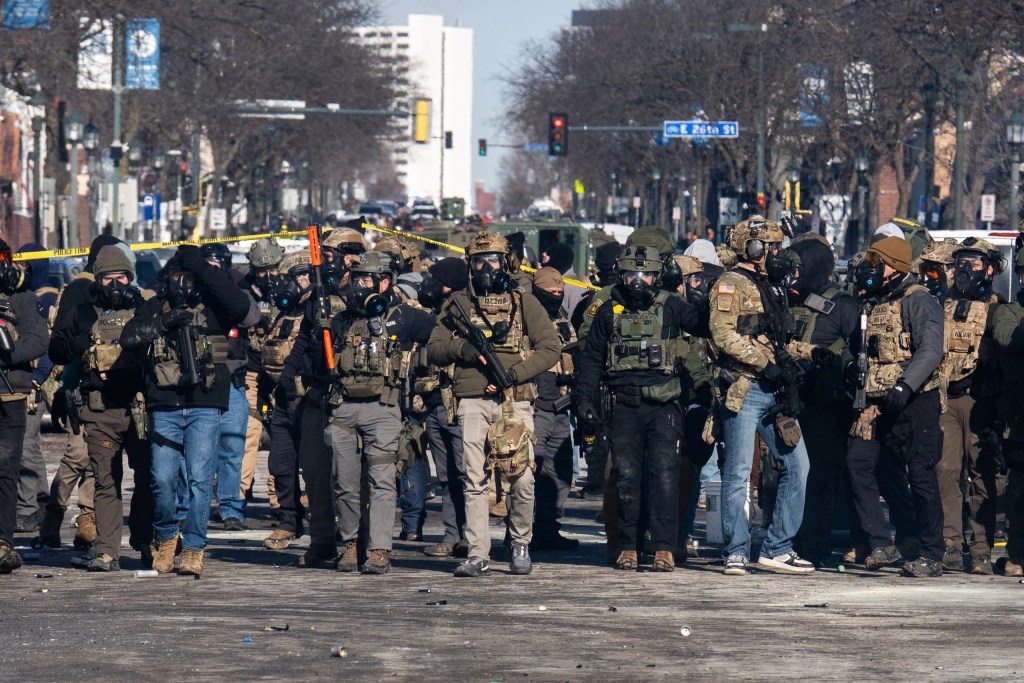
Pretti’s killing came amid local protests against an immigration crackdown – and it instantly set off outrage on social media.
But the intensity of that outrage begs a question: why did it take this victim’s death to break through our collective apathy?
The young man pinned under ICE fire in Chicago last month, or the anonymous aunt dragged off a bus years ago – those stories barely registered.
It took Pretti, a White, middle-class nurse (and military veteran) performing a Christ-like rescue, for many people to say “Enough.”
In effect, our empathy thresholds seem calibrated by which victims are perceived as “like us” – the classic “wounded healer” or Christ-figure archetype.
Racial and Status Bias in Compassion
Social psychology shows these reactions are no accident.
Researchers speak of a “racial empathy gap,” a phenomenon backed by decades of studies demonstrating that people literally see others’ pain differently by race.
One essay notes that “perhaps the most insidious form of undercover racism” is the bias where everyone tends to assume other races feel less physical pain. In practice this means Black and brown victims are routinely disbelieved or downplayed (witness how Michael Brown was described as a “demon” capable of shrugging off gunshots).
Likewise, studies find that social status mediates empathy: on average people report more sympathy for a struggling factory worker than a wealthy CEO, unless their ideology skews strongly in favor of hierarchy.
Taken together, these biases mean a tragic death stirs outrage only if the victim is of high-enough status or belongs to the in-group.
Pretti – a decorated nurse and legal gun-owner – triggered empathy not just because of what happened, but who it happened to. Had he been an undocumented farmworker or a homeless teen, we suspect the country’s collective heartbeat would barely flutter.
The “Wounded Healer” and the Christ Figure
We have mythic templates for what “counts” as a victim. Culturally, society often casts certain martyrs as wounded healers.
In Christian terms, Jesus himself is “framed as a wounded healer, his suffering becoming a site of collective redemption”. The archetype tells us to feel for the caregiver or protector who is struck down – his or her pain symbolically the pain of all.
Pretti fit that mold.
As a VA intensive-care nurse, he was on a mission to heal others; to the cameras he even had the wounded woman in his arms when he was shot.
In the public eye this funeral scene became almost a crucifixion tableau. We see empathy flood for the one who was doing good, the martyr who “bore the wounds” on our behalf.
This subliminal pattern – of honoring the suffering of a ‘Christ-like’ white martyr – helps explain why Pretti’s image (smiling in his uniform) gripped people’s hearts. We instinctively read his death as more meaningful, more grievable, than that of a faceless outsider.
Deeper Perspectives
There’s an even deeper way to frame this bias.
In Daoist thought, compassion comes from seeing the unity behind apparent dualities: we are all part of the same Tao, and someone’s anguish is our own.
Imagine every person as an interference pattern of cosmic waves. In that picture, all beings emerge from one unified field.
On this site, we’ve described creation and fall in math terms:
“The Fall = decoherence (loss of phase alignment among monads), [and] Redemption/Gnosis = re-phasing (recovery of coherence with the source waveform)”.
Translating this metaphor: society’s fall has been a failure to stay “in phase” with others’ suffering; only now are we reluctantly “re-phasing” to feel for someone who resembles us.
The media narrative functions like a tuner: it only picks up certain frequencies (stories) that match the listeners’ presets.
The Daoist or Gnostic view would criticize us for remaining caught in illusion (maya), caring only when the mirror shows a familiar face.
True compassion – in that light – means attuning to every note of the symphony of suffering, not just the notes we favor.
When Suffering Must Be “Relatable”
Mainstream media and institutions amplify this pattern.
Studies of news coverage repeatedly find that tragedies involving white, “respectable” victims attract far more attention than similar crimes against minorities.
The term “Missing White Woman Syndrome” has long been used to describe this bias: press crews swarm when an attractive white woman vanishes, while missing Black and Indigenous women barely make headlines.
For instance, one analysis found six times more newspaper stories about missing white women than Indigenous women of the same age and background. These white-victim stories come with names, large photos and personal details – while minority victims often only get a line or two.
The local law enforcement response echoes the same double standard: in Renée Good’s case (a 37-year-old American also shot by ICE on Jan. 7), state investigators were blocked from the scene and pressured to treat it as an “officer assault” – no criminal probe was opened.
Only after Pretti (another 37-year-old American) fell did state and national officials suddenly act as though a crime had been committed.
In short, the mechanisms of attention and accountability engage only when the victim is coded “legible” by dominant standards: a citizen, a uniform, a life of service.
The Paradox of “Late” Outrage
None of this is lost on the public.
Commentators like LegalEagle – a prominent YouTube lawyer – finally broke down in tears calling this killing an “execution” and urging donations to civil-rights groups. But many readers and viewers experienced cognitive whiplash watching it: how could such a principled figure have stayed silent all this time, only flipping out over this one case?
The reactions exposed a deep moral dissonance.
We feel a kind of bittersweet validation – yes, at least now we care – mixed with shame that empathy arrived so late, and only for a “desirable” victim.
The absurdity is striking: Pretti is not the first person ICE has gunned down on Minnesota streets, yet only his death became a viral cause. Watching a well-educated, well-spoken lawyer burst into tears over Pretti’s murder while hundreds of other atrocities were met with silence produces a knot in the stomach.
The system’s brutality has been clear for years; now it is finally “real” to an audience that waited until an acceptable template was satisfied.
From Catharsis to Commitment
We must resist the temptation to pat ourselves on the back and move on.
Social-media empathy too often becomes mere catharsis. Psychologists warn that online outrage can serve as a pressure valve, making us feel “we’ve done something” by posting, while letting real change stall.
Instead, this awakened compassion can still become meaningful – but only if it is transformed into sustained commitment.
This means pressuring the DOJ and Congress for accountability (as some legislators are doing now), supporting the bereaved family, and building coalitions with those already fighting these abuses. It means recognizing that Pretti’s story could have been any of theirs if America were truly color- and status-blind.
Tupac’s Legacy of Empathy in Action
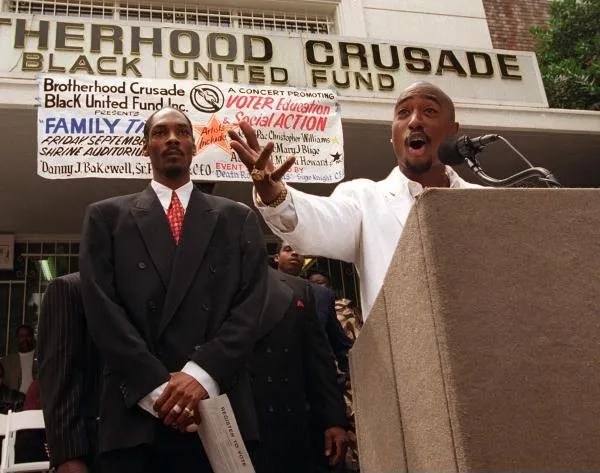
(AP Photo/Frank Wiese)
The late rapper Tupac Shakur warned us decades ago about these very dynamics.
He famously said his artistic “intention has always been to reach people and… implement empathy.” His 1991 album 2Pacalypse Now was described as “the story of the young Black male… about teenage pregnancy, police brutality, [and] poverty”.
In other words, Tupac used his platform to make the invisible visible, to force privileged listeners to feel.
He preached that when the system fails the many, art should challenge us, not just entertain us. Reading the moment through Tupac’s vision, one might say: if our hearts are finally stirred by Pretti, let’s not waste it.
We can channel that empathy toward abolishing the very conditions his death reflects.
Late awareness, by itself, is no virtue.
But if this collective shock jolts us into action, it may yet mark a re-phasing of our society’s moral compass.
Otherwise, we risk consigning empathy to the status of a conditional luxury – only redeemed in the moment of another acceptable victim’s public execution.
The true test will be whether we extend the compassion we feel for Alex Pretti to every child, immigrant, and marginalized person caught in ICE’s crosshairs.
-Brett W. Urben
Sources: Reputable news and social-science analyses document these patterns of selective empathy.
These works explore the racial empathy gap, media biases, mythic archetypes, and perspectives on human unity mentioned above.
Killing of Alex Pretti – Wikipedia
https://en.wikipedia.org/wiki/Killing_of_Alex_Pretti
Unconscious racism is pervasive, starts early and can be deadly | Aeon Essays
https://aeon.co/essays/unconscious-racism-is-pervasive-starts-early-and-can-be-deadly
How Much Empathy Do You Feel When Powerful People Suffer?
https://insight.kellogg.northwestern.edu/article/social-standing-and-empathy
Wounded Healers
https://grokk.ist/embodied-wisdom/wounded-healers/
Gnosis Under Fire – Techno-Gnostic postmodern art project, philosophy blog, conspiracy comedy, original music and remixes, and fiction – with inspiration from Ontological Mathematics (primarily Mike Hockney, et al. and Phillip K. Dick, et al., among other fields and thinkers/artists).
Missing White Woman Syndrome: Psychiatrists and Societal Bias | Psychiatric Times
https://www.psychiatrictimes.com/view/missing-white-woman-syndrome-psychiatrists-and-societal-bias
Media portrayals of missing and murdered Indigenous women | MediaSmarts
Key legislators seek Justice Department records on Alex Pretti and Renee Good killings by next week – CBS News
Thug Life: Tupac Shakur’s Protest Against America’s Systemic Oppression | by Alex Davis | Medium
The power of empathy in the media: Reporting vulnerable communities, By Musikilu Mojeed
 Gnosis Under Fire
You must be logged in to post a comment.