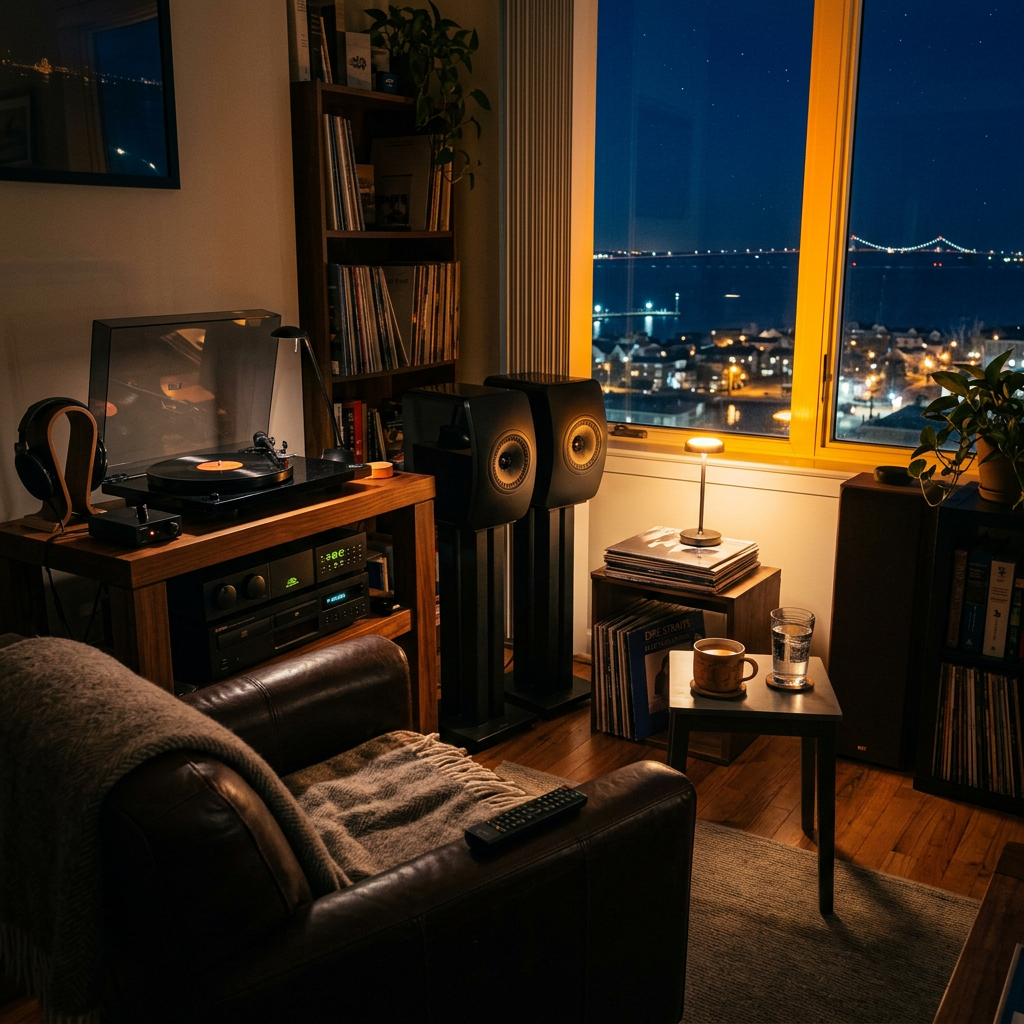
The air in his Chesapeake apartment was heavy with August humidity, but William didn’t notice. His attention was locked on the cascading waveforms lighting up the digital audio workstation on his screen.
He was running a dense, chaotic audio file through Ultimate Vocal Remover, stripping the background noise like the sirens and the breaking glass away from the jagged screams of the crowd.
When the software finished processing, William exported the isolated frequency of human panic. He encrypted the file and sent it to a secure drop-box maintained by the regional cyberpsychology directorate. They needed the pure acoustic data of the riot to calibrate the city’s acoustic dampening fields. By feeding the algorithm the exact pitch of genuine terror, the state could broadcast a perfectly inverted frequency and cancel it out.
Phase cancellation is good cognitive hygiene.
He closed the software, the fans on his PC spinning down into a quiet hum, and opened the content management system for gnosisunderfire.com.
This was his second shift. To the few thousand intellectual dissidents scattered across the coastal sprawl, he was just a rogue satirist cutting through the corporate haze. He pulled up a blank draft and began to type. He leaned heavily into Daoist principles, structuring the essay around Hexagram 47 of the I Ching—Oppression (Exhaustion).
He wrote an abstract critique of the city’s new surveillance measures, wrapping the harsh reality in layers of metaphor and philosophical detachment. It made the reader feel seen, validated, and intellectually superior to the system.
And that was what the system paid him to do.
The directorate had learned a decade ago that you cannot extinguish dissent. By maintaining the website, William provided a crucial pressure valve. The dissidents read his essays, nodded along to the satire, felt the momentary catharsis of subversion, and then went to sleep instead of burning down the regional server farms.
His words replaced action instead of inciting it.
His phone vibrated.
William grabbed his keys and drove out toward a derelict industrial park in Norfolk, where the cracked asphalt was slowly being reclaimed by the marsh.
Inside an abandoned shipping container, and smelling of rust and damp earth, three gamers were waiting around a flickering lantern. They looked at William with the kind of desperation usually reserved for nudity modders.
“Did you get the final architecture?” asked a girl with a shaved head, her hands trembling as she held out a flash drive.
They were trying to deploy a massive “Dark Future” exploit into the city’s augmented reality grid—a cascading code execution that would strip away the corporate overlays and show the citizens the raw, decaying infrastructure of the city for exactly sixty seconds. They believed it would be the spark a riot, make national news.
“Here,” William said quietly, swapping her blank drive for his own. “The injection’s sequenced. You run this, it bypasses the primary firewall.”
The exploit was intentionally flanked by a tracker.
When the modders executed the code, the directorate’s internal sensors would silently log the IP addresses of every terminal that connected to the rebellion’s mesh network. The state needed an active, quantifiable extremist threat to justify the sweeping security budget up for review next month. The girl and her friends were going to provide the exact metrics required.
“Thank you,” she whispered, clutching the drive to her chest. “They’re finally going to see the truth.”
William looked at her clear, uncompromising eyes, feeling a profound, hollow ache in his chest. “Stick to the sequence,” he said, before turning and walking back out into the rain.
By the time he returned to his apartment, the storm had intensified, rattling the glass of his windows. William sat in the dark, staring at the muted glow of his monitors.
He thought about the encrypted drop-box, the soaring, cynical prose on his website, and the earnest girl in the shipping container, waiting for the signal.
His work was equilibrium, a simple scalpel for the state. Through meticulous balance he ensured that nothing ever actually changed.
William reached out and turned the volume knob on his audio interface all the way up, but there was no track playing.
He sat in the dead center of the silence, a man who had perfectly mastered the art of making sure his own life left no echo.