Taxpayer-Funded Corporate Profiteering
Norfolk’s low-income and disabled tenants are being systematically displaced by a corporate-government partnership that uses tens of millions in taxpayer-backed bonds to finance “upgrades” while ignoring habitability, safety, and fair housing laws.
This is renoviction at its most cynical.
Allow mold and breakdowns to fester, unleash disruptive construction, stonewall complaints, then market shiny new units to higher-paying renters.
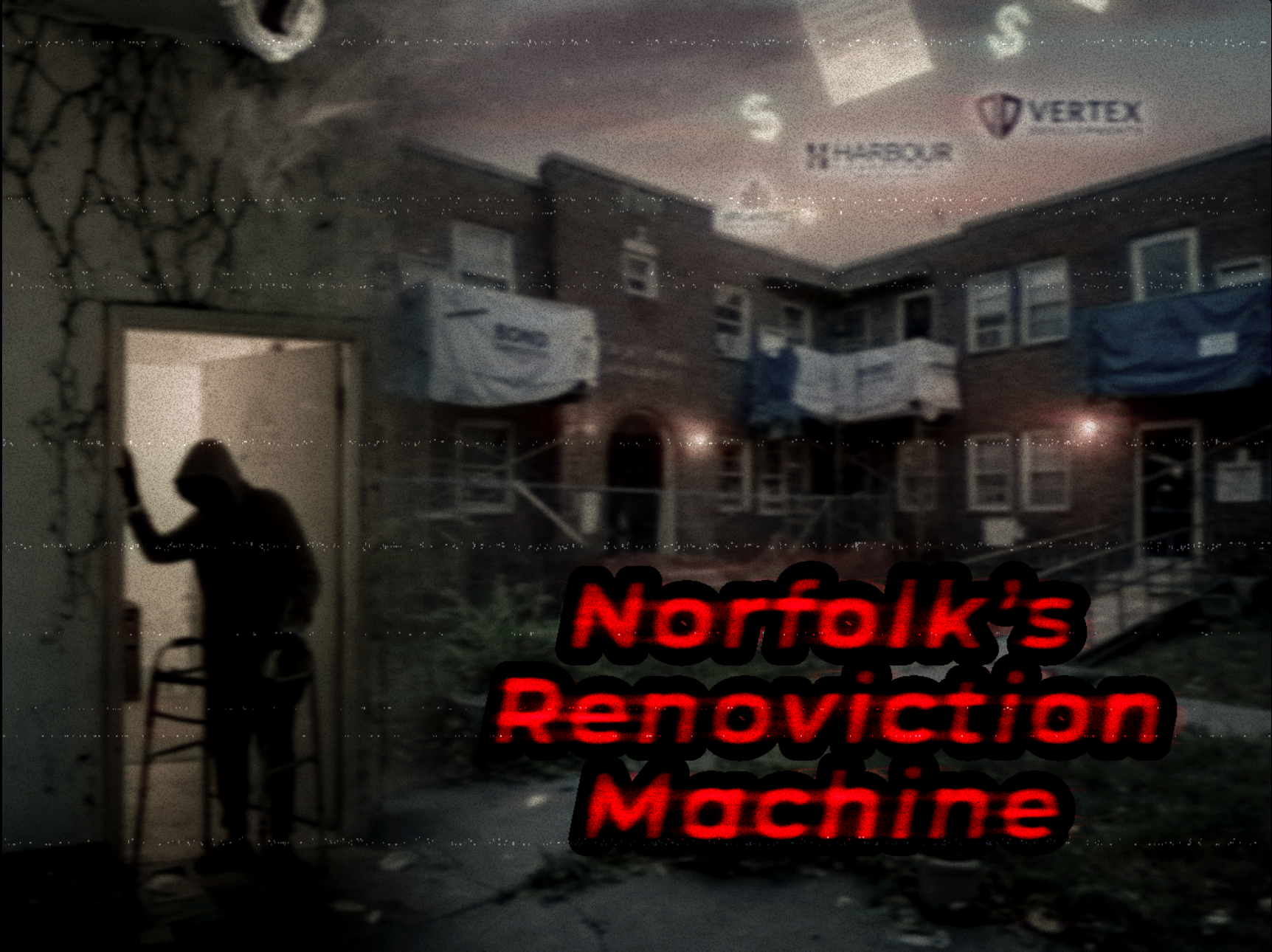
One of their targets: Talbot Park Apartments, the historic 1942–1943 garden-style complex at 118 Warren Street.
In August 2024, the Norfolk City Council approved up to $27,954,000 in tax-exempt multifamily housing revenue bonds through the Norfolk Redevelopment and Housing Authority (NRHA) for 118 Warren Street LLC.
The stated goal: acquire, renovate, and equip 295 units with modern kitchens, bathrooms, and energy-efficient GE appliances.
For long-term tenants — especially those on disability or fixed incomes — the reality is relentless construction chaos, unaddressed mold, ignored safety violations, and management tactics that feel engineered to push people out.
This is not merely an isolated failure, but part of a documented, city-wide pattern in which private LLCs like 118 Warren Street LLC partner with Genesis Properties to exploit NRHA’s bond pipeline while disabled and low-income residents pay the price with their health and housing security.
Genesis Properties’ Track Record
Repeated Fair Housing Violations and Maintenance Neglect
118 Warren Street LLC is the official borrower on the Talbot Park bonds.
Day-to-day control belongs to Genesis Properties of Richmond — the same firm that produced the June 2024 market study for the project.
Genesis has a documented history of putting profits over people:
- In 2014, Genesis-linked entities were sued in federal court for violating the Fair Housing Act at Shockoe Valley View Apartments in Richmond. The complex was built without required accessibility features for people with disabilities. The case settled in 2015 for $600,000 plus extensive retrofits and a $100,000 accessibility fund.
- Genesis has faced tenant lawsuits over chronic habitability failures, including flooding, black mold, cockroaches, lack of heat, and ignored repair requests.
- Tenant reviews across Genesis-managed properties repeatedly describe unresponsive staff, pest infestations, and a clear focus on upgraded units for new renters rather than fixing problems for current residents.
At Talbot Park, the pattern repeats:
- Widespread mold in walls, ceilings, closets, and bathrooms
- Falling ceilings
- Plumbing backups
- Phased renovations that bring noise, dust, and utility disruptions
These often hit disabled tenants the hardest.
Virginia law requires annual smoke alarm inspections with written certification (§ 55.1-1220).
Multiple tenants say promised inspections never happened.
Reasonable accommodation requests for disabilities are reportedly brushed off or delayed.
NRHA’s Past Scandals
A Legacy of Displacement and Fair Housing Lawsuits
NRHA has enabled this model for years.
Its “redevelopment” projects repeatedly draw federal Fair Housing Act lawsuits alleging racial discrimination and illegal displacement of Black, low-income, and disabled residents.
- The 2020 Bryant v. City of Norfolk / NRHA lawsuit over the Tidewater Gardens redevelopment led to a 2021 settlement after residents challenged the displacement of public housing families.
- In December 2024, the Legal Aid Society of Eastern Virginia (LASEV) filed a federal Fair Housing Act lawsuit against NRHA alleging it failed to implement a reasonable accommodation for a disabled tenant — even after formally granting it. The case remains pending as of 2026.
- Additional LASEV actions targeted NRHA for improper minimum rent charges against disabled residents without providing required hardship exemptions.
NRHA frames these bond deals as creating “sustainable mixed-income communities.”
Critics and tenants call it systematic renoviction.
Public dollars flow to private LLCs, current vulnerable residents are squeezed out, and the cycle repeats at properties like Pelham Place, Oak Park, and now Talbot Park.
The Human Cost
Disabled Tenants Pushed to the Breaking Point
One long-term disabled tenant at Talbot Park describes years of mold exposure, uninspected smoke alarms, construction noise and dust that aggravate health conditions, and management stonewalling that has pushed them to the breaking point.
Their experience mirrors dozens of other tenant accounts and directly echoes Genesis’ past Fair Housing violations and NRHA’s pattern of ignoring accommodations.
Virginia’s Residential Landlord and Tenant Act and the Fair Housing Act exist to stop exactly this.
Yet enforcement falls on tenants who must document everything while corporate entities enjoy limited liability and cheap public capital.
This Is Corporate Welfare at Tenants’ Expense
Taxpayers Deserve Better
NRHA continues issuing tens of millions in bonds for similar projects.
Officials tout “progress.”
The record shows displacement, lawsuits, and broken promises.
Genesis Properties and 118 Warren Street LLC are not outliers but symptoms of a broken system that privatizes the profits while socializing the costs:
- Mold-related illnesses
- Stress on disabled residents
- Strained city code enforcement
- The loss of affordable housing stock
Enough.
Public money should preserve housing for those who need it most — not bankroll corporate displacement strategies.
Tenant Resources
- Norfolk Cares Center (landlord-tenant complaints, code enforcement): (757) 664-6510
- Virginia Fair Housing Office (disability discrimination/retaliation): (804) 367-8530 or dpor.virginia.gov/FairHousing
- Legal Aid Society of Eastern Virginia (LASEV): laseva.org or 866-534-5243
- Virginia Legal Aid: valegalaid.org
What Tenants Can — and Must — Do
Document relentlessly (photos, videos, dated logs).
Send every complaint in writing (certified mail or email with read receipts).
Report immediately.
File fair housing complaints.
Get free legal help.
The money trail is clear.
The lawsuits are public record.
The only question is whether Norfolk’s leaders will finally put tenants before developer profits.
Collective exposure is how these dark patterns finally get stopped.
This article is based on public NRHA bond resolutions, federal court filings and settlements (including Shockoe Valley View 2015 and Bryant v. Norfolk 2020–2021), LASEV complaints (2024–2025, still pending), Virginian-Pilot and local reporting, tenant reviews on ApartmentRatings.com and Yelp, and Virginia housing law.
It reflects patterns reported across multiple Norfolk properties.
This reflects the personal experiences of tenants who have come forward, including my own documented experience as a resident at Talbot Park Apartments.