A Research Brief and Call to Action
Abstract
Norfolk, Virginia’s police department has expanded its Real-Time Crime Center (RTCC) by integrating hundreds of Flock Safety automatic license plate readers (ALPRs), public cameras, and voluntary feeds from private resident and business cameras through Axon Fusus. This creates a searchable database of movements and faces across the city, often accessible without warrants. Framed as a response to severe understaffing, the program reflects a national pattern in which cash-strapped departments outsource policing functions to private surveillance vendors.
Independent research demonstrates that these systems deliver only modest, context-specific, or negligible reductions in crime—far below the transformative claims made by vendors. Much of the supporting “evidence” is cherry-picked, out-of-date, or produced under vendor influence. Neuroscience research further shows that ambient surveillance rewires the human brain, triggering unconscious hyper-awareness of faces and gaze detection that fuels anxiety, dread, and erratic public behavior. These effects align with documented misuse of the same systems by law enforcement officers to stalk victims of intimate partner violence, ex-partners, and their families. The infrastructure ties directly into the surveillance-industrial complex, including Peter Thiel-linked investments in Flock Safety amid broader Palantir-style data ecosystems. The result is dehumanization presented as efficiency.
1. Norfolk’s Surveillance Dragnet: From Flock to Private Camera Centralization
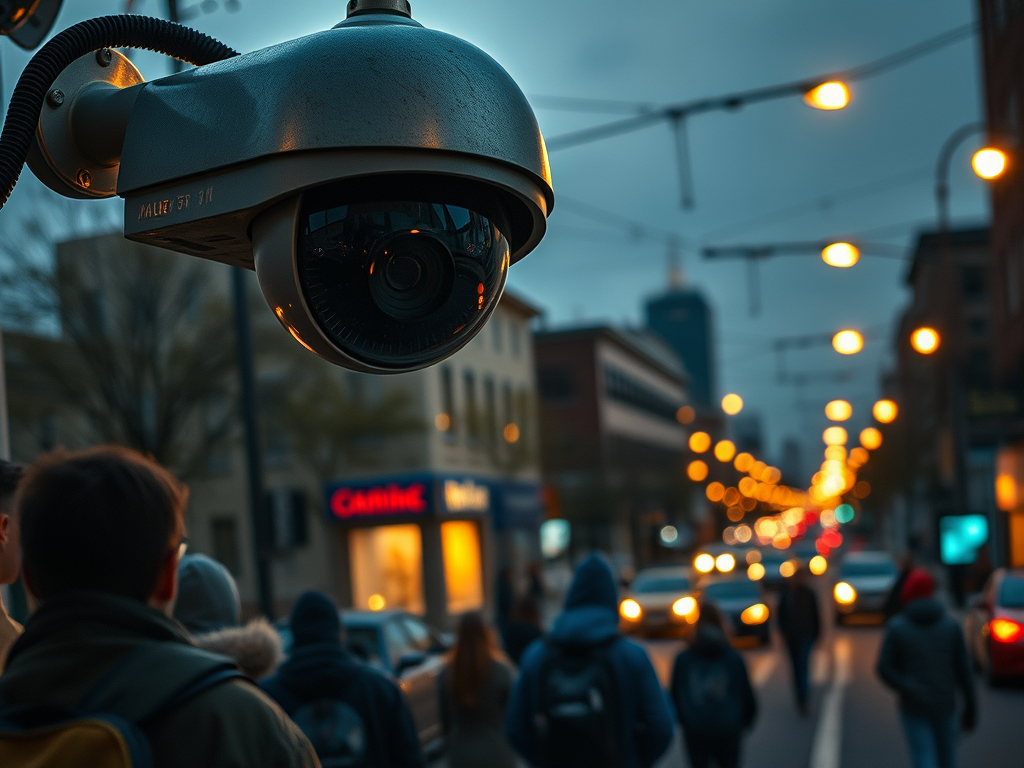
Norfolk PD’s RTCC functions as the central hub for technology-driven public safety, live-monitoring cameras, license plate readers, sensors, 911 data, and additional streams for real-time intelligence, crime analysis, and rapid response. As of late 2025, the city operates approximately 176 Flock Safety ALPR cameras, with expansion plans exceeding 230 units as part of a broader Hampton Roads network of over 600. These devices capture vehicle “fingerprints” (license plates, make/model, stickers) and retain data for 21–30 days in a searchable database available to officers and regional partners, frequently without warrants.
Private cameras add a further layer through the Connect Norfolk program. Residents and businesses integrate feeds via Axon FususCORE devices, granting police access to selected or all streams during nearby emergencies. The program maps private camera locations for rapid post-incident requests and funnels footage into the RTCC ecosystem.
2. The Evidence Gap: Limited and Context-Specific Crime Reduction Amid Vendor Cherry-Picking
Despite aggressive marketing, rigorous independent evaluations reveal that Ring-style doorbell cameras, Flock ALPR systems, and traditional CCTV deliver far less crime reduction than claimed. Meta-analyses of 40 years of CCTV research (Piza et al., 2019, and updates) find only a modest overall effect—approximately 13% crime decrease in treated areas versus controls. The strongest results occur in parking lots (up to 37–51% reduction in vehicle crime), with smaller or statistically insignificant effects in city centers, public housing, residential streets, and public transit. Earlier British Home Office meta-analyses concluded CCTV had “no statistically significant impact on crime whatsoever” in most settings.
Ring video doorbells fare even worse. The company’s flagship 2015–2017 LAPD pilot, repeatedly cited in sales materials, claimed a 55% (or “normalized” 42%) burglary drop in one neighborhood; independent re-analysis showed the figure was inflated, short-term, and reversed within a year. Broader examinations by MIT researchers, CNET, NBC, and Scientific American found little to no published independent data supporting crime prevention. One study indicated neighborhoods without Ring cameras experienced fewer break-ins than those with them. Amazon-owned Ring was later forced to remove crime-reduction claims from marketing after regulatory scrutiny.
Flock Safety’s ALPR technology follows the same pattern. Company-sponsored studies assert dramatic impacts—9.1% clearance-rate increase per additional camera per officer, “10% of reported U.S. crime solved,” and hundreds of thousands of annual case closures. Independent criminologists and investigative outlets (Techdirt, 404 Media, Forbes) have repeatedly flagged these as cherry-picked snapshots that control inputs, methodology, and timeframes while ignoring broader crime trends. Fixed ALPR evaluations (Lum et al.; Koper et al.) show modest gains limited to auto theft and property crime in some deployments, but no consistent reduction in violent crime and often no statistically significant overall effect.
Vendor research is routinely out-of-date or selectively presented. Older studies are recycled; gray-literature reports with smaller effects are downplayed; and favorable short-term data from pilot programs are extrapolated nationwide. Activist researcher and YouTuber Benn Jordan has documented this in detailed investigations, exposing Flock’s overstated efficacy claims alongside security vulnerabilities and misinformation campaigns. Jordan’s analyses demonstrate how companies market unproven systems as “crime-ending” while independent evidence shows minimal societal benefit.
Even departments that initially reported operational “successes” have walked away. In December 2025, Staunton, Virginia, Police Chief Jim Williams, after consulting city leadership, terminated the Flock contract and removed all license-plate readers. Despite acknowledging some investigative utility, the city rejected Flock CEO Garrett Langley’s framing of public criticism as a “coordinated attack” by activists seeking to “defund the police” and “normalize lawlessness.” Chief Williams defended residents’ democratic right to question surveillance, stating the CEO’s narrative “does not reflect the city’s values.” Similar cancellations or rejections have occurred in Charlottesville and other Virginia localities.
The evidence gap is clear: these systems do not produce the broad, significant crime reductions promised. Understaffing justifications for mass deployment therefore rest on marketing, not data.
3. The Psychological Cost: Surveillance Rewires the Brain, Breeding Anxiety and Dread
Ambient surveillance does not merely observe; it reshapes cognition and emotion. A 2024 study using continuous flash suppression found that participants under simulated CCTV conditions detected faces and gaze direction unconsciously approximately one second faster than controls. This involuntary priming of the brain’s social vision circuitry for threat detection occurs under constant observation.
Chronic exposure triggers stress, self-censorship, paranoia, and altered decision-making. It erodes trust, heightens anxiety disorders, and can exacerbate hypervigilance that mimics or intensifies psychotic symptoms. These changes manifest in public spaces as social withdrawal, emotional dysregulation, and traffic aggression—patterns consistent with reports of erratic driving and “half-psychotic” behavior amid persistent dread. The panopticon internalizes control, leaving populations in a low-grade fight-or-flight state that degrades authentic human interaction.
4. Systemic Risks: Law Enforcement Misuse of These Systems to Monitor Victims of Abuse
Centralized databases and integrated private feeds create opportunities for abuse that extend beyond general privacy erosion. Nationwide cases demonstrate how officers exploit Flock ALPR, city surveillance cameras, and RTCC-style systems to stalk intimate partners, ex-partners, domestic violence victims, and their families—often in direct violation of policy and law.
In Sedgwick, Kansas, former police chief Lee Nygaard used Flock cameras to track his ex-girlfriend’s vehicle 164 times and her new boyfriend’s 64 times over four months, then followed them in his police car. In Milwaukee, officer Josue Ayala ran Flock queries on a woman he was dating and her ex-boyfriend more than 170 times in roughly two months, leading to misconduct charges. Similar cases include Menasha officer Cristian Morales, Braselton police chief Michael Steffman, Orange City officer Jarmarus Brown, North Charleston Lt. Ryan Terrell, and a Wichita officer who used ALPR to stalk an estranged spouse.
Private security personnel who contract alongside or inherit access in hybrid ecosystems face parallel risks. The ACLU and investigative reporting highlight how the absence of robust safeguards allows officers—some in leadership roles—to weaponize the very tools marketed for public safety. When private camera feeds integrate into police-accessible platforms like Fusus, the risk compounds: data from homes and businesses becomes searchable by individuals who may themselves be perpetrators of abuse.
Such misuse intensifies harm to domestic violence victims, who already face elevated rates of technology-facilitated stalking. The systems transform “voluntary” community tools into instruments of targeted surveillance against the vulnerable.
5. Connecting the Dots: Understaffing as Pretext, Thiel/Palantir Ecosystem as Engine
Norfolk PD operates with approximately 510 sworn officers, well below historical targets, mirroring shortages across Virginia agencies. Understaffing supplies the rationale for tech as a “force multiplier,” shifting from human policing to corporate platforms—yet the modest or nonexistent crime-reduction evidence undermines even this justification.
Flock Safety’s funding includes investments from Peter Thiel’s Founders Fund, which supported recent rounds valuing the company at $7.5 billion. Thiel, co-founder of Palantir, maintains ideological and financial ties to data-driven population management tools. Although Palantir holds no documented direct Norfolk contract, its fusion platforms exemplify the predictive ecosystems into which Flock feeds integrate. Recent Thiel-linked Palantir stock transactions reflect portfolio adjustments amid AI and defense growth, yet the structural alignment persists. Understaffing thus serves as cover for privatizing core police functions while eroding civil liberties.
6. Broader Implications: Dehumanization and the Loss of Gnosis
The Norfolk model exemplifies a national shift toward surveillance states constructed through “community partnerships.” Documented brain changes, abuse cases, and the persistent evidence gap scale to societal levels: a population rendered anxious and fragmented loses capacity for unmonitored public life and collective resistance. When private cameras feed state databases, consent becomes illusory. Corporate actors profit from the data that undermines human autonomy. The observed dread and erratic behavior are visible symptoms of a system that reduces citizens to data points.
Call to Action: Reclaim Autonomy and Demand Accountability
Residents must refuse FususCORE integration and private camera registration with Norfolk PD. City Council should receive demands for full RTCC transparency reports, warrant requirements for all database queries, and an immediate moratorium on further expansions.
Support ongoing lawsuits, such as those from the Institute for Justice challenging Flock’s warrantless dragnet. Build parallel community structures—human-scale neighborhood response networks and mutual aid—independent of tech dependency. File FOIA requests for RTCC data policies, Flock contracts, and Fusus integrations; track funding flows from Thiel-linked entities.
Advocate for state legislation mandating warrants for ALPR and private-feed access. Partner with the ACLU, EFF, and similar organizations to challenge these systems. Psychological resistance includes deliberate use of unmonitored spaces and practices that restore unmediated social cognition.
The dread is data.
Don’t ignore it.
And give me the right of way for once at the crosswalk.